Tips for Tasting Sessions With Wedding Caterers Without Stress
ArticlesMaster the art of sampling wedding menu offerings with caterers confidently and calmly. From setting realistic expectations to communicating flavours and preferences, these expert guidelines help couples and planners curate a mouthwatering feast, ensuring every bite reflects your vision – all without the overwhelm.
For every Indian couple, the wedding feast holds a place of deep cultural and emotional significance. The menu, with its lavish spreads and intricate flavours, promises to delight every guest, becoming a cherished memory long after the celebrations end. Yet, as momentous as it is, the process of menu tasting with caterers can sometimes feel overwhelming, with the pressure of making dozens of delicious decisions. Curating a menu that mirrors your unique tastes and traditions does not have to be a daunting task. With graceful planning, clear communication, and a calm approach, you can transform the menu tasting into a joyful and memorable experience.
Understanding the Purpose of Menu Tastings
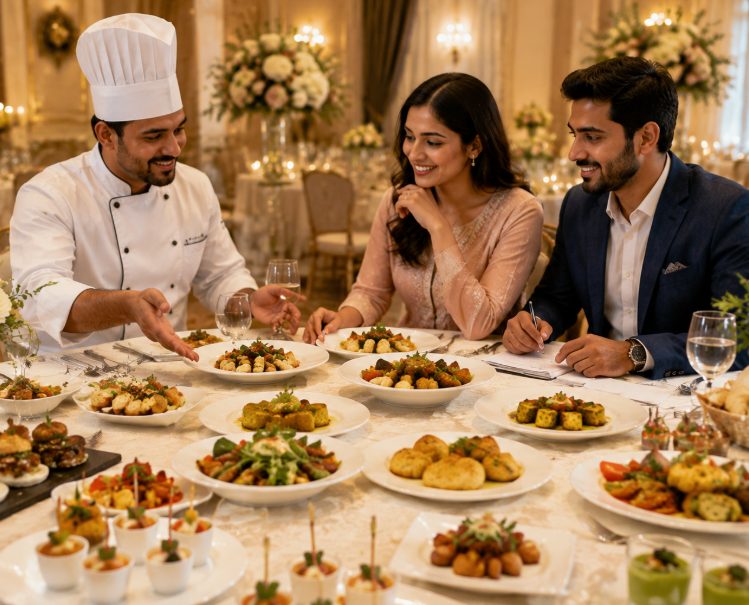
Menu tasting is not just about sampling dishes—it is a vital step where your wedding vision comes to life through taste, aroma, and presentation. This is your opportunity to collaborate closely with expert caterers, ensuring each dish aligns with your preferences, suits the event’s scale, and celebrates your family traditions. A thoughtful approach to the tasting process helps eliminate uncertainties, builds trust with your caterer, and ultimately leads to a wedding feast that exceeds expectations.
Setting Realistic Expectations
Embarking on a tasting session with clear and practical expectations sets the tone for a productive experience. Begin by understanding that the tasting is meant to offer a true representation of what will be served on the big day, but minor variations should be anticipated due to factors such as larger quantities or seasonal ingredient availability. Remember that tastings are typically offered for shortlisted menu items rather than the entire running list. Discuss the number of dishes you can sample in advance so you are prepared for the session.
Be mindful of logistics—the seating arrangement, plating style, and even serving temperature may differ between the private tasting and the actual wedding. Recognizing these realities ensures you approach the tasting with a balanced, informed perspective, allowing space for practical suggestions from the caterer.
Communicating Flavours, Preferences, and Priorities
Successful menu curation relies on transparent and detailed communication. Before your tasting, dedicate time to reflect on your favourite flavours, significant family customs, and must-have dishes. Are you envisioning an entirely vegetarian affair, a fusion of global and regional cuisines, or sticking to family classics with a gourmet twist? Articulate dietary restrictions, preferred spice levels, and ingredients to avoid well in advance.
For multicultural weddings, emphasize the desire for diversity or specific cross-cultural dishes that honour both families. Sharing mood boards, family recipes, or even anecdotes about festive meals can provide invaluable context to your caterer. The more precisely you share your expectations and preferences, the more tailored and meaningful your menu will be.
Curating a Balanced and Memorable Selection
Indian wedding menus are renowned for their grandeur, but an overwhelming variety can dilute the dining experience. Approach your selection with balance and purpose. Choose from different categories—starters, main courses, breads, sides, desserts—while maintaining harmony across tastes and textures. Blend crowd-pleasers with experimental dishes, ensuring there are ample vegetarian and non-vegetarian options if required.
Work closely with your caterer to limit repetitions (for example, too many dishes with similar base gravies), and pay attention to how courses transition from one to the next. A thoughtfully sequenced menu, moving from light appetisers to hearty mains and finishing with delicate desserts, helps guests savour every bite.
Making the Most of Your Tasting Session
Approaching your tasting with a calm and open mind maximizes the experience. Start by requesting that dishes are served in the same order as they will be on the wedding day, so you can appreciate progression and palate balance. Bring along key decision-makers—perhaps both sides of the family, or your planner—ensuring that the tastes of all major stakeholders are considered.
Take notes on presentation, aroma, taste, and how each dish aligns with your vision. Do the flavours evoke warmth and celebration? Does the look of the platters match your wedding style—classic, modern, rustic, or regal? Be honest yet constructive with your feedback, discussing improvements or tweaks in seasoning, garnish, or presentation. Do not hesitate to request adjustments, as most caterers are delighted to customise dishes to suit your palette.
Tackling Dietary Needs and Guest Preferences
Today’s wedding guestlists reflect a delightful mix of dietary preferences, allergies, and cultural considerations. Ensure you ask your caterer about accommodating vegan, gluten-free, Jain, or other special diets if required. It is wise to sample at least one or two items from each special category, both for taste and for peace of mind.
When possible, preview options for children and elderly guests, who may appreciate milder or lighter food. Anticipate the need for nut-free or allergy-aware labelling, and work with your caterer to devise discreet, elegant solutions for the celebration.
Infusing Personality: Signature Dishes and Custom Touches
Adding personal notes to your menu creates heartfelt experiences. Consider featuring a signature cocktail, a beloved family dessert, or a fusion appetiser that reflects your unique story as a couple. Share inspirations from your travels or milestones—a dish reminiscent of your first holiday or one that roots back to your families' hometowns.
During the tasting, discuss with your caterer how presentation styles, serving vessels, and even menu naming can highlight these personal details, making the banquet even more memorable for your guests.
Navigating Beverage Pairings
Thoughtful beverage pairings can elevate the dining experience. Inquire about mocktails and cocktail options that complement each course, or experiment with unique lassi, sherbet, or spiced tea combinations. If your menu includes international influences, explore wine or sparkling drink suggestions. Request samples alongside relevant courses, and pay attention to how the drinks interact with different spices and flavours in your menu.
Clarifying Service and Presentation Details
The wedding feast is not just about taste but also about visual grandeur and seamless service. Use the tasting as a forum to discuss plating styles, buffet layouts versus plated service, and the management of live counters. Clarify how each dish will be kept at optimal temperature for guests and how allergens or spice levels will be communicated discreetly.
Talk about garnishes, crockery, and décor in tandem with your broader wedding theme—these finishing touches play an important role in creating an impression of effortless sophistication.
Managing the Process: Staying Calm and Organised
With multiple opinions from family members and planners, it is easy for menu tasting to become overwhelming. Allocate enough time for the session, avoiding back-to-back appointments or distractions. Maintain open, respectful dialogue, allowing each participant to share insights while keeping the couple’s vision at the forefront.
Trust your instincts—if a dish delights you in every way, add it to the final selection. If you remain undecided about a particular course, revisit options or request a second, smaller tasting of the contenders. Rely on your caterer’s expertise, but feel empowered to advocate for your choices.
Finalising Your Wedding Menu with Confidence
Once satisfied, document every detail—final menu choices, presentation notes, dietary modifications, and beverage pairings. Confirm portion sizes and quantities, ensuring generous but not wasteful portions for every course. Request written confirmation from your caterer, including backup plans for last-minute ingredient substitutions or unforeseen requirements.
Send your caterer a heartfelt note of appreciation for their patience and partnership. A respectful, collaborative relationship sets the stage for not just a superb feast but also a smooth culinary experience on your wedding day.
Embracing the Journey to a Joyful Banquet
Curating your wedding menu is not just a task on your checklist—it is a celebration in its own right. By approaching menu tastings calmly, communicating openly, and embracing the creative process, you ensure that every bite reflects your love story, traditions, and dreams. With these thoughtful expert guidelines, couples and planners can craft a wedding feast that welcomes and delights every guest, making your special day truly unforgettable.