How to Handle Food Preferences and Dietary Restrictions at Weddings
ArticlesEnsure every attendee savors a delicious meal with ease by accommodating special diets gracefully. From plant-based and gluten-free to allergy-friendly selections, this expert advice helps couples and planners design an inclusive culinary journey that everyone will cherish and remember.
A wedding is a celebration of love, but it is also an occasion that brings together a beautiful tapestry of guests, each with unique culinary preferences and requirements. India’s rich diversity is reflected not only in its traditions and customs but also in the food we cherish. As couples and wedding planners strive to create memorable and inclusive experiences, ensuring that every guest can savor the wedding feast with ease is fast becoming a hallmark of thoughtful hospitality. Special diets—such as vegetarian, vegan, gluten-free, Jain, and allergy-friendly—are more common than ever, making it essential to design a wedding menu that accommodates all.
Crafting a culinary journey that delights every palate while honoring dietary choices and restrictions requires forethought, creativity, and collaboration. Here is expert guidance to help you navigate special diets and create a wedding banquet that everyone will remember for all the right reasons.
Understanding the Importance of Inclusivity
Food is central to Indian weddings, from intricate multi-course banquets to lavish buffets brimming with tradition. When guests feel considered in every detail—including their meals—they feel truly welcomed. Ignoring dietary restrictions can inadvertently exclude loved ones from the festivities and diminish their experience. On the other hand, an inclusive menu is a gesture of care that resonates deeply and creates lasting memories.
Identifying Dietary Preferences and Restrictions
The first step in accommodating special diets is to understand your guest list. There are several ways to gently gather information about food allergies, intolerances, and preferred diets:
Include a section for dietary requirements on the RSVP card or digital invitation
Have personal conversations with immediate family and close friends to understand major restrictions
Coordinate with families on both sides to learn about traditional or religious dietary customs, such as Jain, Satvik, or halal meals
Make a consolidated list for quick reference while working with caterers or chefs
Popular Special Diets at Indian Weddings
Vegetarian and vegan: While most Indian weddings offer an array of vegetarian selections, it is important to also cater to guests seeking vegan options—dishes free from dairy, ghee, and other animal-derived ingredients.
Gluten-free: With rising health awareness, gluten-free requests have grown. These guests require alternatives to wheat-based items such as rotis, naans, and many desserts.
Allergy-friendly: Common allergens include nuts, dairy, soy, and shellfish. A single oversight can endanger a guest’s well-being, making diligence essential.
Religious and cultural considerations: Jain, Satvik, kosher, halal, and other ritual-based diets must be thoughtfully addressed to honor the traditions of your guests.
Personal preferences: Low-carb, low-sugar, keto, and other lifestyle-related preferences may also arise, especially for wellness-conscious attendees.
Collaborating with Your Caterer
Once you have an accurate understanding of your guests’ needs, communicate these clearly to your caterer or chef. Today’s top catering teams are well-versed in customizing wedding menus to ensure inclusivity:
Share your consolidated dietary list well in advance, allowing time to create or adapt recipes
Ask your caterer for sample menus and tastings that reflect special dietary needs
Discuss cross-contamination protocols in the kitchen, especially for guests with severe allergies
Request separate labeling for dishes to ease selection and build trust among guests
If your caterer is unfamiliar with certain requirements—such as vegan paneer alternatives or Jain adaptations of classic dishes—consider a tasting session to find crowd-pleasing solutions together
Designing a Diverse Menu
Inclusivity does not mean compromise; instead, it opens the door to culinary creativity. Here are some ideas for designing an inviting and diverse menu:
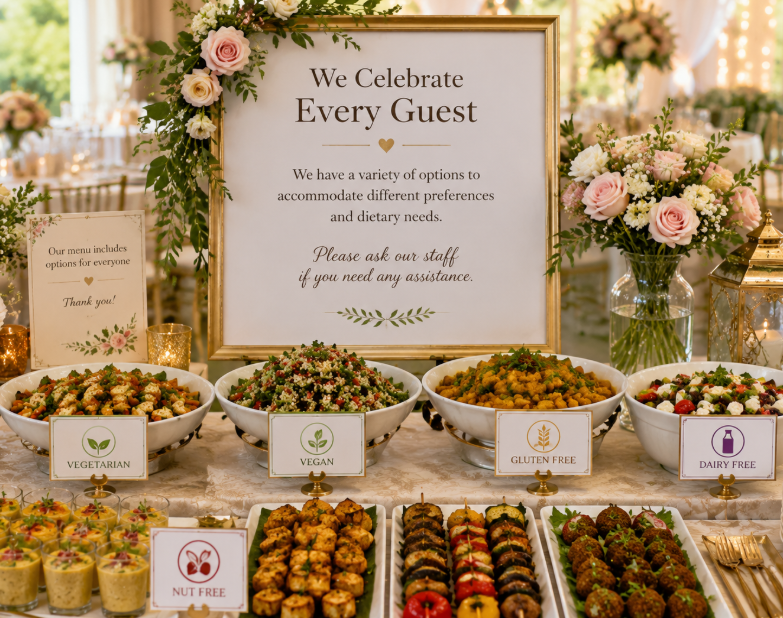
Have clearly marked stations or sections on the buffet devoted to various diets—vegan, gluten-free, Jain, or nut-free—so guests can make confident choices
Incorporate naturally inclusive Indian dishes like mixed dal, sabzi, khichdi, and rice paper rolls that are beloved and meet many dietary needs
Offer a range of breads, such as millet rotis (bajra, jowar) for gluten-free choices alongside traditional wheat breads
Explore plant-forward appetizers like hara bhara kebabs, beetroot tikki, and quinoa cutlets, which are both indulgent and suitable for vegan and gluten-free guests
Embrace global influences with salads, pastas, or Asian-inspired noodles, adapting them to suit special diets
Ensure that desserts include options such as fruit platters, vegan kheer, or gluten-free halwa to end the meal on a high note
Addressing Food Allergies and Safety
Guests with food allergies require extra attention. Establishing a safe dining environment is as critical as the food itself:
Request your caterer to avoid cross-contact while preparing allergen-free dishes by using separate utensils and cooking stations
Maintain an ingredient card for each dish at the serving table or buffet with allergens clearly listed
Educate your serving staff about common allergens and the importance of accurate dish identification
For plated meals, consider discreet symbols or color codes to help guests and staff identify allergy-friendly options
Offering Customization and Flexibility
If your event is intimate or features food stations, live counters can be an excellent way to address special diets. Guests can customize their plates, selecting ingredients that suit their preferences without the pressure of navigating complex buffets. Interactive stations, such as dosa or salad bars, allow flexible personalization and add fun to the dining experience.
For larger weddings, coordinate with your caterer to prepare a few extra portions of widely compatible dishes that suit the most common dietary needs. This backup ensures every guest enjoys a hearty meal, even if unanticipated requests arise.
Thoughtful Presentation and Communication
Presentation is an integral part of any Indian wedding feast. When accommodating special diets, thoughtfully designed signage helps guests navigate their choices and feel included.
Opt for elegant menu cards at each table, with dietary symbols (V for vegan, GF for gluten-free, N for nut-free, etc.) highlighted alongside each dish. The cards need not be elaborate; a simple, chic design adds a polished touch to your dining setup.
Train your serving team to assist and answer questions about ingredients and preparation methods. Friendly, informed staff further extend your hospitality and reassure guests about their choices.
Celebrating Inclusivity with Signature Dishes
Rather than relegating special dietary menus to “alternative” status, elevate them with unique and creative offerings. Delight your guests with fusion dishes—think millet falafel chaat, vegan thandai, or gluten-free rasmalai. Showcase the culinary heritage and innovation that makes Indian cuisine so adaptable and vibrant.
Consider curating a tasting menu for select guests with strict dietary requirements, turning the experience into an opportunity to surprise and impress with inventive flavors. By investing in variety and quality, couples demonstrate the value they place on every invitee’s happiness.
Leading by Example
When couples and families take the initiative to embrace dietary inclusivity, they set a thoughtful standard for future celebrations. It communicates compassion, attention to detail, and a profound appreciation of India’s cultural and gastronomic diversity.
The warmth and satisfaction of sharing a delicious meal with loved ones, without worry or restriction, becomes a cherished memory. An inclusive approach encourages togetherness, making the wedding feast a moment where everyone can participate fully—nourished in every sense of the word.
A Lasting Gesture of Care
Providing memorable hospitality extends far beyond décor and entertainment; it is most heartfelt when everyone feels cared for. By thoughtfully accommodating special diets at your wedding, you weave respect, love, and community into the fabric of your celebration.
May your big day be remembered not just for its beauty, but for embracing every guest at the table—ensuring that each flavor tells a story of inclusion, delight, and togetherness.