How to Coordinate Groom and Bride Outfits Perfectly
ArticlesAchieve seamless style synergy on your big day with expert tips on pairing her lehenga and his sherwani. Discover colour palettes, fabric pairings and accessory tricks to craft a harmonious ensemble that highlights both personalities. Ensure your wedding looks in perfect unison.
Seamless Style Synergy: Expert Tips for Pairing Her Lehenga and His Sherwani
The wedding day is a celebration of love and togetherness, a moment when two lives merge into a harmonious future. Naturally, every couple aspires to mirror this unity not only through rituals and ceremonies but also through their wedding attire. Achieving a seamless style synergy between the bride’s lehenga and the groom’s sherwani is more than just a trend—it is a meaningful expression of partnership and aesthetic consonance. In the opulent world of Indian weddings, coordinating these ensembles creates a visual narrative that heightens the splendor of the day and captures hearts in every frame.
Let’s unravel expert insights and practical tips on pairing your lehenga and sherwani, from choosing tonal palettes and complementing fabrics to selecting accessories that tie the look together, ensuring a wedding ensemble that celebrates both individuality and oneness.
The Art of Colour Coordination
Choosing the Right Palette
The foundation of harmonious wedding attire lies in the thoughtful selection of colours. Whether you gravitate towards classic reds and golds or prefer unconventional pastels and dual tones, identifying a complementary palette sets the tone for your entire look.
1. Complementary Hues:
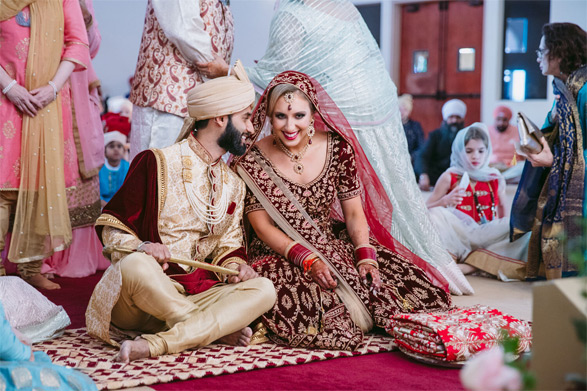
Instead of matching ensembles exactly, consider complementary shades. If the bride’s lehenga flaunts a deep maroon, a muted beige or classic ivory sherwani with maroon accents on the stole or buttons creates coherence without monotony.
2. Tonal Variations:
Play within the same colour family using lighter and darker shades—think blush pink for the bride and a rose-tinted sherwani for the groom. This layered approach elevates the synergy while allowing each personality to shine individually.
3. Contrasting Yet Cohesive:
For couples seeking a dramatic effect, explore contrasting colours that still belong to a harmonious spectrum. A royal blue sherwani alongside a gold or peach lehenga, tied together with similar embroidery threads, exemplifies elegance and unity.
Seasonal and Venue Considerations
Let the season and venue guide your colour choices. Softer pastels and greens blend beautifully with summer garden weddings, while jewel tones and velvets enrich winter festivities. Always factor in the backdrop to ensure the paired looks resonate splendidly with the setting.
Fabric Pairings for Visual Harmony
Coordinated Textures
A vital, often overlooked element in ensemble pairing is fabric texture. Contrasts between silk, velvet, georgette, or brocade, when thoughtfully balanced, add depth to shared style statements.
1. Silk and Brocade:
Opt for silk lehengas paired with brocade sherwanis for a timeless, regal aura. The subtle sheen and intricate weaves create a luxurious match—perfect for lavish celebrations.
2. Velvet & Georgette:
If the bride’s ensemble features rich velvet, the groom’s sherwani can mirror this plushness with velvet detailing—on collars, cuffs, or stoles. Alternatively, the light flow of georgette can be complemented with a crisp cotton-silk sherwani for a balanced, breathable look ideal for day events.
3. Embellishments & Embroidery:
Unified, intricate details such as zardozi, sequins, or thread embroidery—applied thoughtfully on both outfits—form a discreet yet powerful correlation, spotlighting craftsmanship and harmony.
Accessorising in Unison
Statement Pieces and Subtle Matches
Accessories are where synergy comes to life—unifying even the most differing styles with deliberate coordination.
1. Matching Accents:
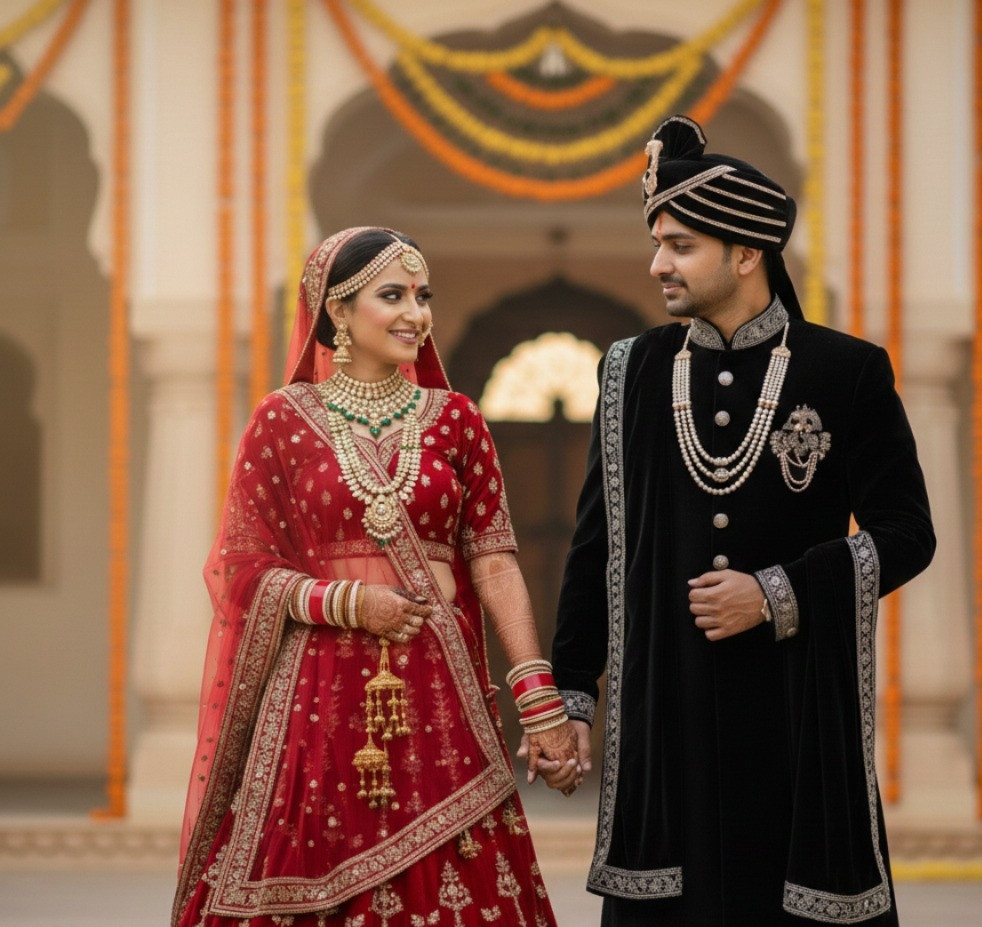
Jewellery for the bride and brooches, buttons, or cufflinks for the groom can echo common motifs or gem colours. For example, a bride’s emerald choker mirrored by the groom’s matching pocket square or necklace offers subtle visual continuity.
2. Shared Stoles & Dupattas:
Coordinated stoles and dupattas with similar embroidery work or palettes are an elegant way to visually connect ensembles, especially for the Saptapadi or pheras.
3. Traditional Touches:
Consider aligning traditional pieces—such as a bride’s matha patti with the groom’s embellished safa—that share design elements or hues, enhancing the couple’s cultural resonance.
Footwear and Beyond
Sometimes, even the smallest details make the biggest impact. Harmonising footwear—like embroidered juttis—or incorporating similar motifs on both the bride’s and groom’s shoes provides a refined touchpoint for united style.
Infusing Personalities While Maintaining Harmony
Signature Elements
While coordination is key, it should never dim individual personalities. Infuse personal touches within your complementary ensembles—a family heirloom necklace for the bride, or an insignia motif on the groom’s sherwani—crafted within the overarching colour and design scheme.
Balancing Bold and Subtle Tastes
If one partner prefers opulence and the other gravitate towards simplicity, seek a meeting ground. Let the bolder attire carry subtle cues from the other’s ensemble through accents and embroidery, ensuring that despite contrasts, the looks are in conversation with each other.
Collaborating for a Cohesive Wedding Look
Involve Your Designers
Engage in open dialogue with your designers or stylists. Share sample swatches, mood boards, or even sketches. When both outfits are designed in tandem, you unlock endless avenues to incorporate synchronised themes, especially across pre-wedding and wedding day functions.
Plan for All Events
Extend the synergy across all major events—engagement, mehendi, sangeet, and reception. Decide whether you wish to maintain a signature style thread throughout or reserve coordinated ensembles for key occasions like the wedding and the reception.
The Power of Visual Trials
Before the big day, conduct a trial session by donning both ensembles together. This helps you visualise the synergy and address minor tweaks in accessories, hues, or fit, which could make all the difference on the wedding stage and in photographs.
Tips for Flawless Style Pairing
Coordinate, Don’t Clone:** Aim for unison, not uniformity. Matching every detail can feel forced; instead, pick two to three key elements to synchronise.
Prioritise Comfort:** Harmonious style should never come at the expense of ease. Ensure both ensembles suit your comfort and the event’s duration.
Consult the Experts:** A stylist’s eye can often pick subtle connections that tie two looks artfully together—invest in professional advice if needed.
Test Under Venue Lights:** What looks perfectly paired in daylight may differ under indoor or evening lighting. Test the colours and textures in similar lighting conditions to avoid surprises.
Document Inspirations:** Create a vision board from your favourite combinations—collage of swatches, embroidery patterns, accessory ideas—to guide your decisions.
Conclusion: Celebrate Unity in Diversity
Your wedding day attire is a tapestry woven from personal histories, family traditions, and the promise of a shared future. Achieving seamless style synergy between a bride’s lehenga and a groom’s sherwani is not about following fleeting trends but about thoughtful coordination, authentic to your personalities and story.
As you embark on the journey of togetherness, let your ensembles narrate a tale of unity in diversity—blending colours, fabrics, and accents into a visual harmony that delights the eyes and the heart. With mindful planning and a touch of creativity, your paired wedding look will become an exquisite symbol of your union, captured vividly in memories and photographs for years to come.
Embark on this creative process with warmth, openness, and collaboration. In this synergy, discover not only beautifully matched attire but also the joy of harmonious partnership—an auspicious beginning to your lifelong journey together.