The ABCs of Wedding Catering: Deciding Between Buffet vs Served Meals
CateringPlanning your wedding menu? Explore the key differences between buffet and served meal options to find the perfect fit for your celebration. Compare dining styles, guest experience, and overall wedding atmosphere to make a confident catering decision for your special day.
Planning your wedding menu? Explore the key differences between buffet and served meal options to find the perfect fit for your celebration. Compare dining styles, guest experience, and overall wedding atmosphere to make a confident catering decision for your special day.
Planning the wedding menu is about more than choosing delicious dishes. The way food is presented and served can shape the entire dining experience, influence the flow of the celebration, and contribute to the atmosphere you want your guests to remember. Two of the most popular wedding catering styles are buffet service and served meals. Both options can work beautifully for an Indian wedding, but each creates a distinctly different experience.
A buffet gives guests the freedom to choose what they want and how much they would like to eat. A served meal offers a more structured and relaxed dining experience, with each course brought directly to the table. The right choice depends on your guest list, wedding schedule, venue, desired atmosphere, and the kind of hospitality you want to offer.
Understanding the differences between these dining styles can make wedding menu planning easier and help you select an option that suits your celebration with confidence.
Buffet Catering for Weddings
A buffet wedding menu allows guests to move to a central food station, select their preferred dishes, and return to their tables to dine. This style is especially popular for celebrations with a wide variety of dishes, as it allows guests to explore the menu according to their individual tastes.
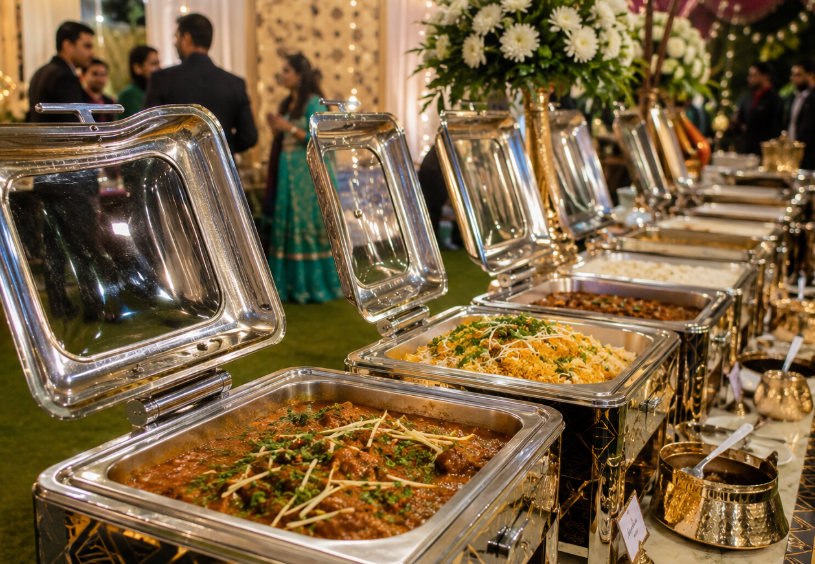
For Indian weddings, a buffet can accommodate the richness and variety that guests often expect. From regional specialities and vegetarian delicacies to breads, rice dishes, desserts, and live food stations, a buffet allows different flavours to be displayed together in an inviting arrangement.
Guest Experience at a Buffet
The greatest advantage of a buffet is choice. Guests can select dishes based on their preferences, dietary needs, and appetite. Someone who enjoys traditional Indian food can choose familiar favourites, while another guest can sample different flavours from across the menu. Guests also have greater control over portion sizes, which can make the dining experience feel flexible and personal.
A buffet also encourages movement and interaction. Guests may visit the food counters together, discuss their selections, and discover dishes they may not have otherwise chosen. This informal rhythm can work well for lively wedding celebrations where guests are comfortable mingling between ceremonies, conversations, and entertainment.
At the same time, a buffet requires guests to leave their tables and wait their turn at the food counters. If many guests begin dining at the same time, queues may form. The arrangement of the buffet area therefore becomes important, particularly when the guest list is large.
How a Buffet Shapes the Wedding Atmosphere
Buffet service generally creates a relaxed and sociable atmosphere. It suits weddings that feel vibrant, welcoming, and interactive. Guests are free to move around, meet people from different sides of the family, and return for additional servings if they wish.
This style can be particularly suitable when the wedding schedule includes several activities or when the celebration is designed to feel open and informal. Guests can choose when to dine instead of following a fixed sequence of courses. The overall pace feels more flexible, allowing the meal to blend naturally with the rest of the celebration.
A well planned buffet can also become part of the visual appeal of the venue. The arrangement of serving counters, presentation of dishes, and overall dining setup can complement the wedding décor and make the meal feel like an important part of the celebration.
Practical Considerations for a Buffet
The layout of the venue should be considered carefully before choosing a buffet. Food counters should be easy to locate without interrupting the main celebration. There should also be enough space for guests to move comfortably, especially if the wedding includes elderly guests, children, or a large number of attendees.
The menu should be arranged in a way that keeps the service smooth. Dishes can be grouped thoughtfully so that guests can move from one section to another without confusion. Clear descriptions of dishes may also help guests understand the selection, especially when the menu includes several unfamiliar preparations.
A buffet may also require attention to replenishment and presentation throughout the meal. The food counters should remain inviting as guests continue to arrive. When planned well, the service feels abundant, organised, and welcoming rather than crowded.
Served Meals for Weddings
A served meal, sometimes called table service, brings the food directly to each guest at their table. Instead of moving to a central food counter, guests remain seated while the meal is served in a planned sequence. Depending on the menu, this may include a selection of courses or a complete meal served at once.
This catering style offers a more formal dining experience. It allows the meal to follow a clear rhythm and gives the celebration a composed, elegant character. For couples who want guests to remain seated and enjoy uninterrupted conversations, a served meal can be an excellent choice.
Guest Experience with a Served Meal
The most notable benefit of a served meal is convenience. Guests do not need to stand in queues or carry plates from one area to another. They can remain comfortable at their tables while the meal is brought to them.
This can be especially thoughtful for guests who may find it difficult to move around during a busy celebration. It also allows families and friends to continue conversations while dining, creating a calm and connected experience.
A served meal provides less personal choice than a buffet, as guests usually receive a predetermined menu. The dishes and portions are decided in advance, so there is less flexibility for guests who prefer to choose only specific items or serve themselves according to their appetite. For this reason, the menu should be planned with the guest list and their preferences in mind.
How a Served Meal Shapes the Wedding Atmosphere
Served meals create a polished and formal atmosphere. They are well suited to weddings that aim for an elegant, structured, and intimate dining experience. With guests seated throughout the meal, the celebration can feel more coordinated and refined.
This style can also support a carefully planned wedding programme. When the meal is served according to a fixed schedule, it becomes easier to coordinate dining with speeches, performances, or other planned moments. The dining experience has a defined beginning and progression, which can be helpful when the wedding timeline is closely organised.
The presentation of each dish can add to the sense of occasion. A served meal makes every course part of the overall dining experience, allowing the menu to feel considered and curated from start to finish.
Practical Considerations for a Served Meal
A served meal requires careful coordination between the catering team and the wedding schedule. Food must reach the tables at the right time, and service should remain smooth across the venue. The number of guests, table arrangement, and available service staff all influence how efficiently the meal can be delivered.
The menu also needs to be selected with balance in mind. Since guests will generally receive the same meal, the dishes should appeal to a broad range of tastes. If your guest list includes people with different dietary preferences, these requirements should be discussed clearly while planning the menu.
Table placement is another important consideration. Guests should have enough space to dine comfortably, and the service team should be able to move around the tables without difficulty. A well organised setup helps the meal feel seamless and ensures that guests can focus on the celebration.
Buffet Versus Served Meal: Making the Right Choice
When comparing a buffet and a served meal, start by considering the experience you want your guests to have. If you want a flexible, social, and choice driven celebration, a buffet may be the better fit. It allows guests to explore the menu, decide their portions, and move freely through the dining experience.
If you prefer a calm, formal, and coordinated atmosphere, a served meal may be more appropriate. It keeps guests at their tables, creates a steady dining rhythm, and gives the meal a refined sense of occasion.
Your guest list should also guide the decision. A buffet can work well when guests have varied food preferences and enjoy selecting their own dishes. A served meal may be ideal when you want the menu to be consistent and the dining experience to feel more structured.
The wedding venue and schedule are equally important. Consider the space available for food counters, the distance between dining and celebration areas, and the way the meal will fit into the day’s programme. A buffet needs comfortable movement around the serving area, while a served meal depends on smooth table service and careful timing.
It is also useful to think about the mood of the wedding as a whole. A lively daytime celebration may naturally suit a flexible buffet arrangement, while an evening reception with a more formal setting may pair beautifully with a served meal. However, either style can be adapted to suit the couple’s vision when planned thoughtfully.
Creating a Memorable Wedding Dining Experience
Whichever option you choose, the dining experience should feel connected to the overall wedding celebration. The menu, presentation, service style, table arrangement, and timing should work together rather than feel like separate decisions.
For a buffet, focus on easy movement, appealing presentation, and a menu that offers variety without creating confusion. For a served meal, focus on comfort, balanced choices, and well coordinated service. In both cases, consider the needs of your guests and the atmosphere you want to create.
The best wedding catering decision is not necessarily the most elaborate one. It is the option that feels natural for your celebration and allows guests to enjoy the food, conversations, and special moments with ease.
A buffet and a served meal can both create a memorable wedding dining experience. The buffet offers variety, freedom, and a lively sense of interaction, while the served meal offers comfort, elegance, and a more organised rhythm. By considering your guests, venue, wedding schedule, and desired atmosphere, you can choose the dining style that reflects your celebration most beautifully. When the service style matches the spirit of the wedding, the menu becomes more than a meal. It becomes a warm and meaningful part of the day.