Mehndi Design Arabic Design for Front & Back
ArticlesDiscover exquisite Arabic mehndi patterns that elegantly adorn both the palm and back of your hands, bringing a blend of modern sophistication and timeless charm to your bridal look. Perfect for brides and wedding planners seeking unique, statement-making designs for the big day.
Every bride dreams of embracing a look that is both unique and unforgettable on her wedding day. One of the most intimate elements that truly enhances a bridal appearance is mehndi. Among the many styles that have captivated Indian brides, Arabic mehndi patterns stand out for their flowing motifs, artistic sensibility, and sheer elegance. Featuring intricate lines, floral forms, and playful spaces, Arabic mehndi designs seamlessly marry modern sophistication with timeless appeal. For brides and wedding planners seeking fresh inspiration, exploring the graceful world of Arabic mehndi offers an opportunity to make a statement that is refined, beautiful, and deeply memorable.
Understanding the Allure of Arabic Mehndi Patterns
Arabic mehndi patterns are celebrated for their fluidity and distinct motifs, offering a departure from densely packed traditional designs. The hallmark of Arabic mehndi lies in its bold, free-flowing lines, geometric shapes, and strategic use of negative space that allow the underlying skin to become part of the art. This makes the patterns visually light yet undeniably striking—a feature that has found favour among modern brides who appreciate simplicity without compromising on elegance.
Unlike other regional styles, Arabic mehndi draws inspiration from nature, featuring generous use of flowers, vines, leaves, and paisleys. These elements can be tailored for both the palm and back of the hands, creating a cohesive look that complements bridal attire effortlessly. The resulting effect is an enchanting canvas that highlights a bride’s individuality and sense of style.
Why Choose Arabic Mehndi for Your Wedding?
Brides today desire more than traditional motifs; they seek designs that can set them apart while resonating with their personal aesthetic. Arabic mehndi responds perfectly to this desire for statement-making artistry. By embracing the characteristic spaciousness and contemporary patterns, Indian brides can enjoy a mehndi design that is both modern and classic, making it ideal for pre-wedding festivities, the main ceremony, or even a reception look.
Additionally, Arabic mehndi is admired for its adaptability. Whether you envision a delicate pattern whispering across your fingertips or a bold design cascading over your forearm, this style allows endless possibilities for customisation to suit your bridal vision.
Elegant Arabic Mehndi Patterns for Palms
The palm is traditionally where the mehndi artist can display the most creativity, transforming the space into a work of art. Arabic patterns on the palm often feature large floral motifs at the centre, surrounded by trailing vines and leaf patterns that elegantly drape toward the fingers. This creates a balanced composition—opulent yet airy—that does not feel overwhelming.
For brides who prefer minimalism with impact, a singular floral burst or a combination of spaced-out paisley elements can beautifully highlight the palm. These designs often leave delicate spaces, giving the skin room to breathe and lending a sense of modern artistry to classic bridal mehndi.
Those desiring more coverage may opt for patterns with intricate detailing along the sides, gently graduating towards the wrist. Pairing bold lines with intricate filigree work can result in a truly captivating visual, ideal for the bride who wishes to strike the perfect balance between tradition and contemporary flair.
Captivating Mehndi Art for the Back of the Hands
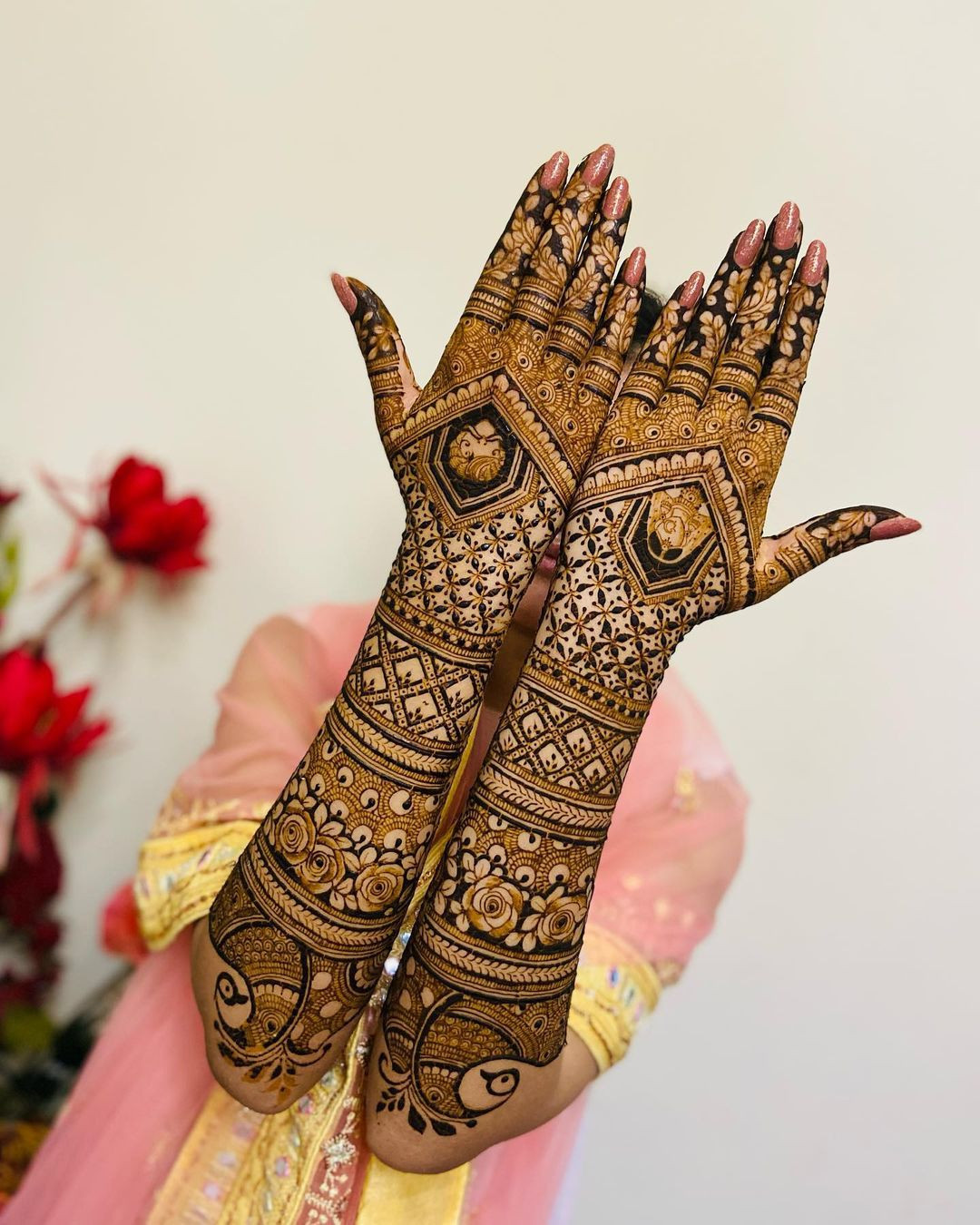
The back of the hands offers a different aesthetic canvas, where Arabic mehndi can be crafted to complement jewellery and enhance the bridal ensemble. Popular motifs here include latticed grids, elegant bracelet-style bands, and dainty floral trails weaving across the hand and fingers.
For a modern touch, consider mandala-inspired circles at the centre or fine leafy vines starting at the wrist and trailing up to the fingers. Leaving portions of the skin uncovered not only makes the design visually lighter but also draws attention to rings and bangles—a subtle yet sophisticated styling element.
Another increasingly popular choice is the use of asymmetric layouts. By placing patterns off-centre or allowing vines to travel diagonally, brides achieve a sense of movement and individuality. Whether bold or delicate, these artistic touches ensure the back of the hand is every bit as enchanting as the palm.
Combining Palm and Back Patterns for a Harmonious Look
The true beauty of Arabic mehndi lies in how palm and back designs can be coordinated yet distinct, offering symmetry while showcasing varying patterns. For a cohesive bridal look, opt for complementary motifs—such as matching florals, leaves, or paisleys—that reference each other without duplicating. This approach creates an elegant flow, making every gesture picture-perfect throughout your wedding celebrations.
To further elevate your bridal style, work closely with your mehndi artist to tailor both sides of your hands. Integrating meaningful elements—like your initials, wedding date, or symbolic patterns—can lend a deeply personal and bespoke touch to your overall appearance.
Choosing the Right Arabic Mehndi Artist
Selecting the right artist is crucial to achieving a flawless Arabic mehndi look. Look for professionals who specialise in this style and can demonstrate a portfolio with diverse, well-executed Arabic patterns. A skilled artist will ensure clarity of lines, balanced proportions, and a refined finish that enhances each motif’s natural beauty.
Before the big day, schedule a consultation to discuss your preferences—whether you favour bold, statement artistry or subtle sophistication. A trial session can be invaluable for finalising the design, ensuring it aligns perfectly with your bridal jewellery and outfit.
Tips for Beautiful, Long-Lasting Mehndi
To ensure your Arabic mehndi looks vibrant and pristine on your wedding day, consider these tried-and-tested tips. Begin with clean, exfoliated hands for the henna to adhere well. Once applied, allow ample time for the mehndi to dry before gently removing the paste; avoid washing with water immediately to let the stain deepen naturally.
After scraping off the dried paste, apply a light layer of natural oil—such as coconut or mustard oil—to seal in the colour. For brides who want an even richer hue, wrap your hands lightly or keep them warm for a few hours to activate the dye further.
Lastly, avoid contact with water or chemical products for the first few hours to maintain the intensity and longevity of your mehndi design—a glowing testament to your bridal radiance.
Incorporating Arabic Mehndi into Your Wedding Celebrations
Arabic mehndi is not limited to the bride alone. These graceful designs can be shared with bridesmaids, mothers, and even guests, creating a cohesive and stylish visual theme throughout your mehndi celebration. Coordinated patterns, smaller motifs echoing the bride’s design, or simplified versions for the family can unify the overall aesthetic beautifully.
For wedding planners, Arabic mehndi offers an excellent opportunity to create interactive experiences during mehndi nights. Setting up dedicated corners with skilled artists allows guests to enjoy a touch of artistic flair, making the celebration even more memorable.
Embracing the Beauty of Arabic Mehndi for a Timeless Bridal Statement
Arabic mehndi patterns have emerged as a sophisticated choice for brides who desire an artistic merge of tradition and modernity. Whether adorning the palm, the back of the hand, or both, these designs promise elegance and individuality on one of life’s most cherished occasions.
As you plan your wedding look, let the allure of Arabic mehndi inspire you to choose patterns that celebrate your style and complement the festive spirit of your day. Graceful, versatile, and inherently beautiful, Arabic mehndi designs ensure your hands tell a story as special as the journey you are about to begin.